Image
Image
Image
Image
Image
Gallery showing 5 of 5 images
The historic town of Rushworth is nestled amid the world’s largest Box Ironbark forest.
Established during the Victorian Gold Rush in 1853, Rushworth has retained much of its original character through one of very few remaining well-preserved main street of heritage buildings classified by the National Trust.
The nearby historic Whroo township, now deserted, was once a thriving village that developed around the base of Victoria’s largest open-cut gold mine at Balaclava Hill.
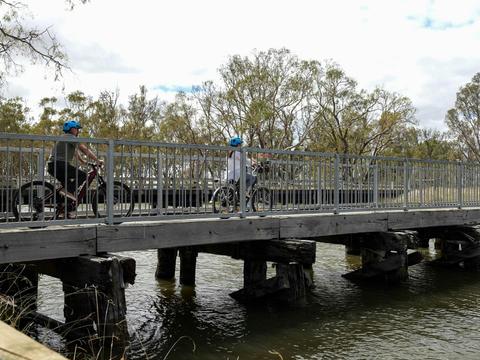
Rushy, as it’s commonly nicknamed, is a popular tourist stop – meander along the natural landscape taking in interpretive signage describing the site as it was centuries ago. Take a self-guided cycling or walking tour to Whroo and the Balaclava Mine, through the state forest, and grab lunch, dinner or an ice cream in town when you’re done.

I visited Balaclava Mine in May 2026 with a friend while road tripping back to Melbourne, and it ended up being an interesting little detour into some old gold mining history. It’s definitely one of those spots you need a car to get to because it’s pretty isolated and tucked away out in the bush. The roads leading there are quiet and there’s only minimal parking nearby, mostly just a small dirt pull off area behind the mine where we parked. There was a little sign and a bench marking the walking path up, and from there it was only a short walk to the viewing areas. The walk itself was easy and didn’t take long at all. Once we reached the top, there was a lookout platform where you could peer down into the mine shafts below. The viewing areas are actually quite well maintained, with solid metal barriers around the main platforms to stop people falling in. Around other sections though there’s only wire fencing, so I’d definitely keep a close eye on kids or anyone wandering too near the edges. We wandered around to a second lookout platform which had wooden stairs leading up to it and gave a better overall view across the main mining area. From up there you can really get a sense of the scale of the old workings and how massive the site once was. There’s also another staircase leading down into part of the mine itself, though it’s gated off to the public. It didn’t appear locked, and I’ve heard stories of people climbing down there at their own risk, but we definitely weren’t about to do that. It honestly looked both fascinating and slightly terrifying. Instead, we stuck to the official viewing areas and took in the preserved remains from above. Some sections have been fenced off while others are left more open, and you can still spot parts of the old mine entrances and areas where equipment or underground rail systems would have once operated. Nature wise, the area is actually really peaceful. Even though it feels remote, there are a few houses scattered nearby so you’re not completely alone out there. There were heaps of bird noises and bush sounds around while we explored, which gave the whole place an eerie atmosphere that suited the abandoned mine setting really well. That said, there honestly isn’t a huge amount to do there beyond the short walk and the lookouts. Since you can’t safely go down into the mine itself, most of the experience is viewing it from above and reading the plaques about the history of the area. I enjoyed stopping by and I’m glad we checked it out, but it’s probably more of a quick roadside detour than a major attraction. I think if guided underground tours were ever offered it would make the place incredible, because what you can see hints at a really fascinating history beneath the surface. As it stands though, it’s more of a quiet historical stop for people interested in mining history, abandoned places, or scenic little side quests on a country drive. There aren’t toilets, cafes, or really any facilities nearby, so it’s definitely more of a “stop, explore for half an hour, then continue on” kind of place. Still, I appreciated the peaceful atmosphere and the preserved history, and it made for a pretty unique break during the drive home.

To these young people who may ignore the fences and go inside the caves for adventure , once you go inside, use your phone to light your steps, because there is a big gap or hole on the ground which leads to the underground, the cave is very dark if you didn't watch your step, you may all of sudden fell into the next under level which is so dark,dirty, and mildly dangerous. You better not go inside, if you insist, please use light whatever on your hand 👌 to lead the way.

Driving to this location, be prepared that the last 15km to the site is gravel road and once you reach the mine, access to the mine entrance is now closed from public (unless you’re willing to enter anyway at your own risk). The walk around the area is fine but not much else to see. In my opinion, it’s not worth the drive and getting the car all dusty.

Very quiet here today, hot and dry. The walk around the hill is mostly in the shade and gives you a good understanding of the terrain that people used to toil in and leads to the 2 lookouts. There’s also a tunnel, closed, to look at but unfortunately you can go down the concrete staircase to the base. There rustic but clean toilets at the info centre.

Although it’s closed to public and you can’t go all the way down, it’s still worth to have a look and read the history of what it used to be. Kids loved it. Easy walk around the site. No proper entrance or parking but just find the spot of gravel road that leads up to the staircase.
Phone
1800 804 446Website
Visit websiteWhroo VIC 3612