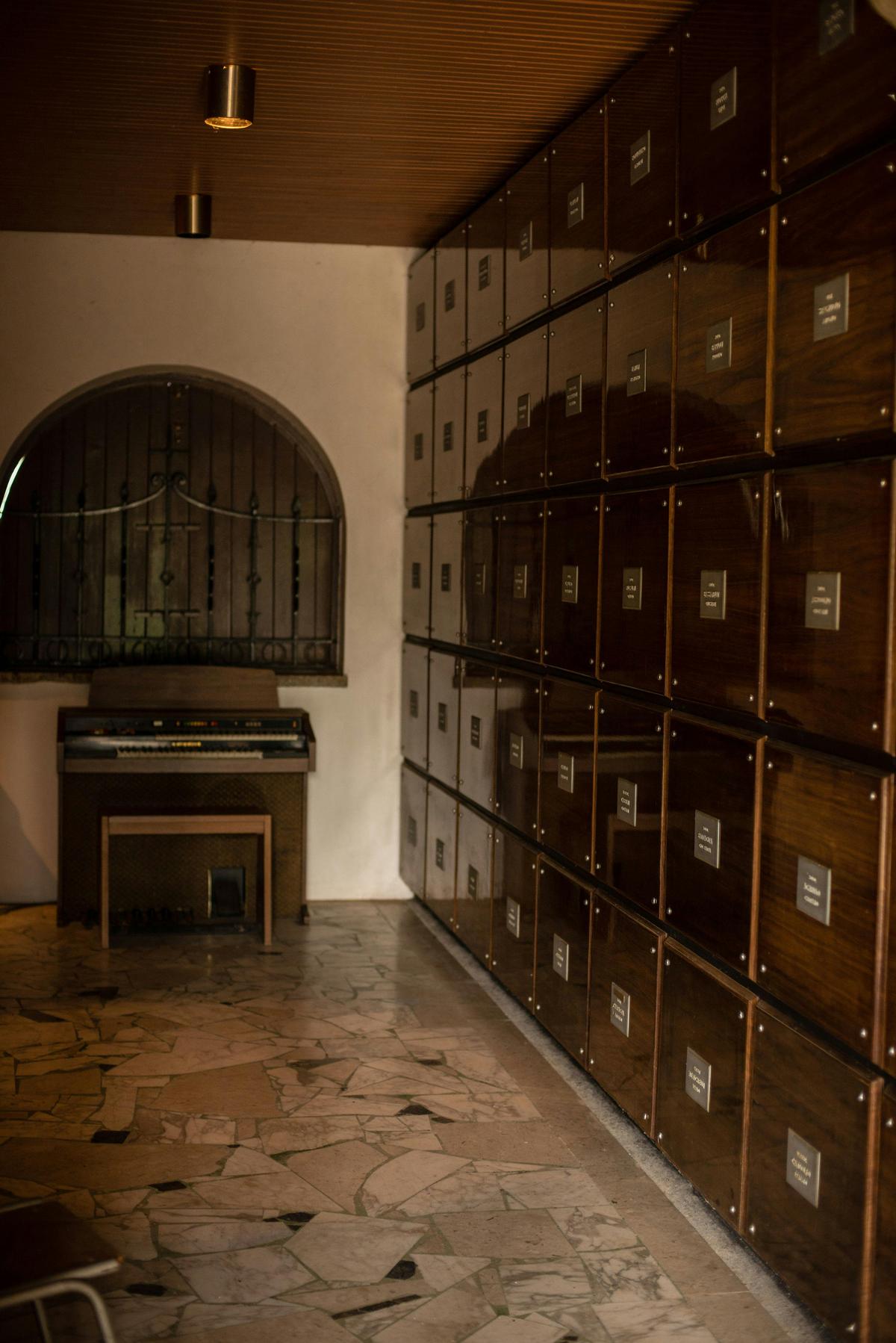
During World War II, 4000 Italian, German and Japanese Prisoners of War were detained at Murchison. Those who died at Murchison were buried in the local cemetery but floods in 1956 did major damage to the graves. The Italian families in the municipality were persuaded by Luigi Gigliotti to pay for the building of a mausoleum - the Ossario.
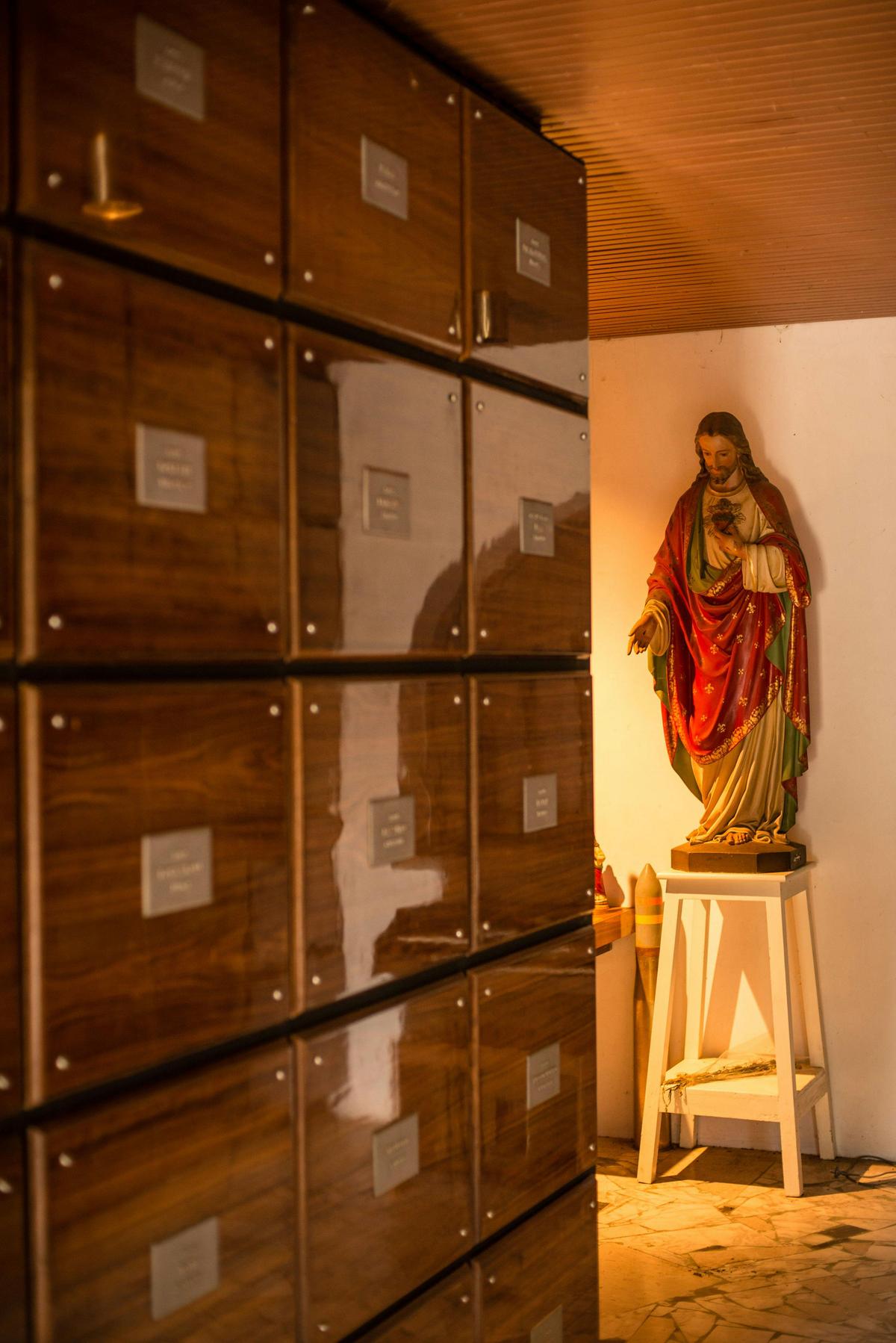
Luigi also convinced authorities to bury all the Italian Prisoners of War and detainees who died in Australian prison camps in the mausoleum. The Ossario is the home of mass celebrations each year around the time of Remembrance Day.
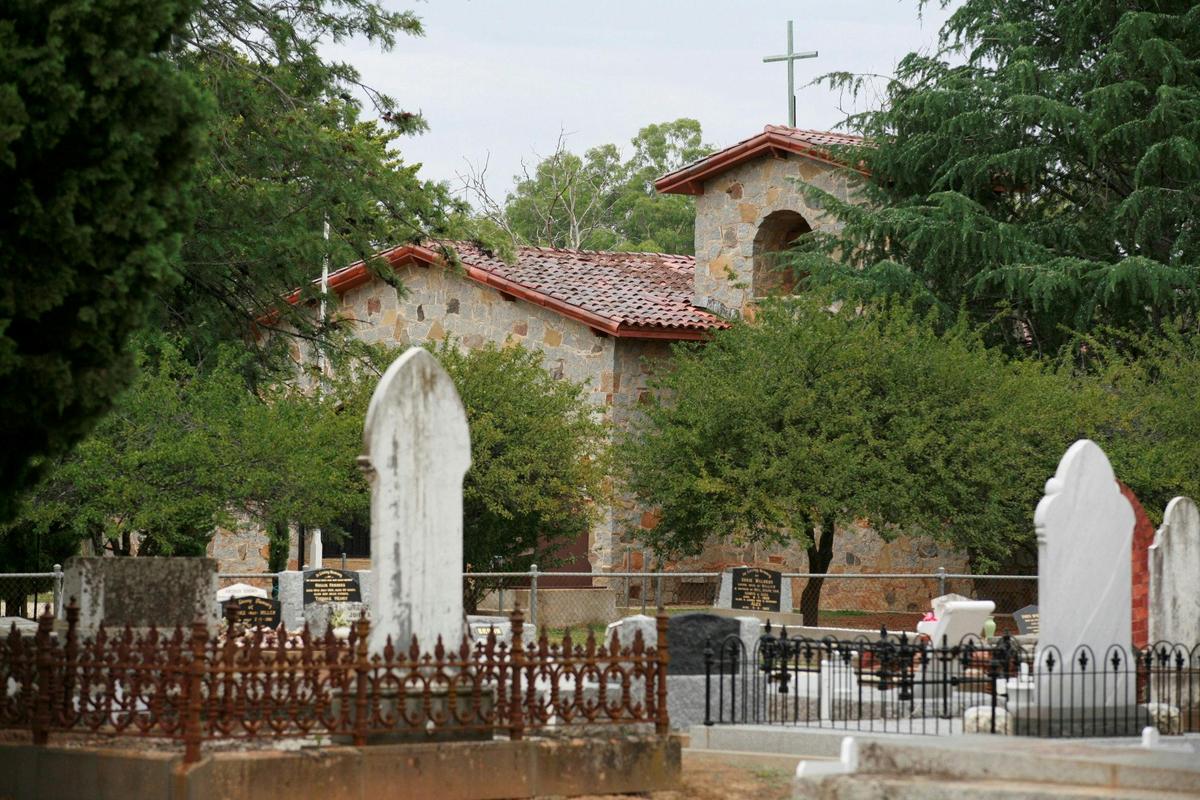
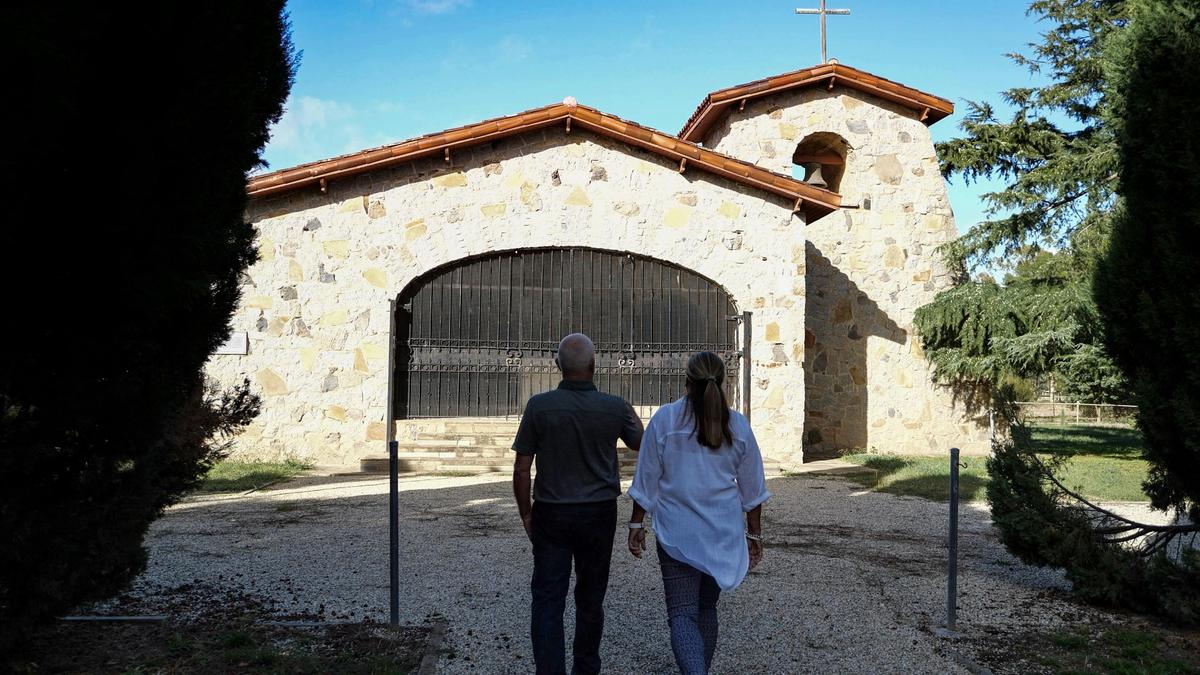
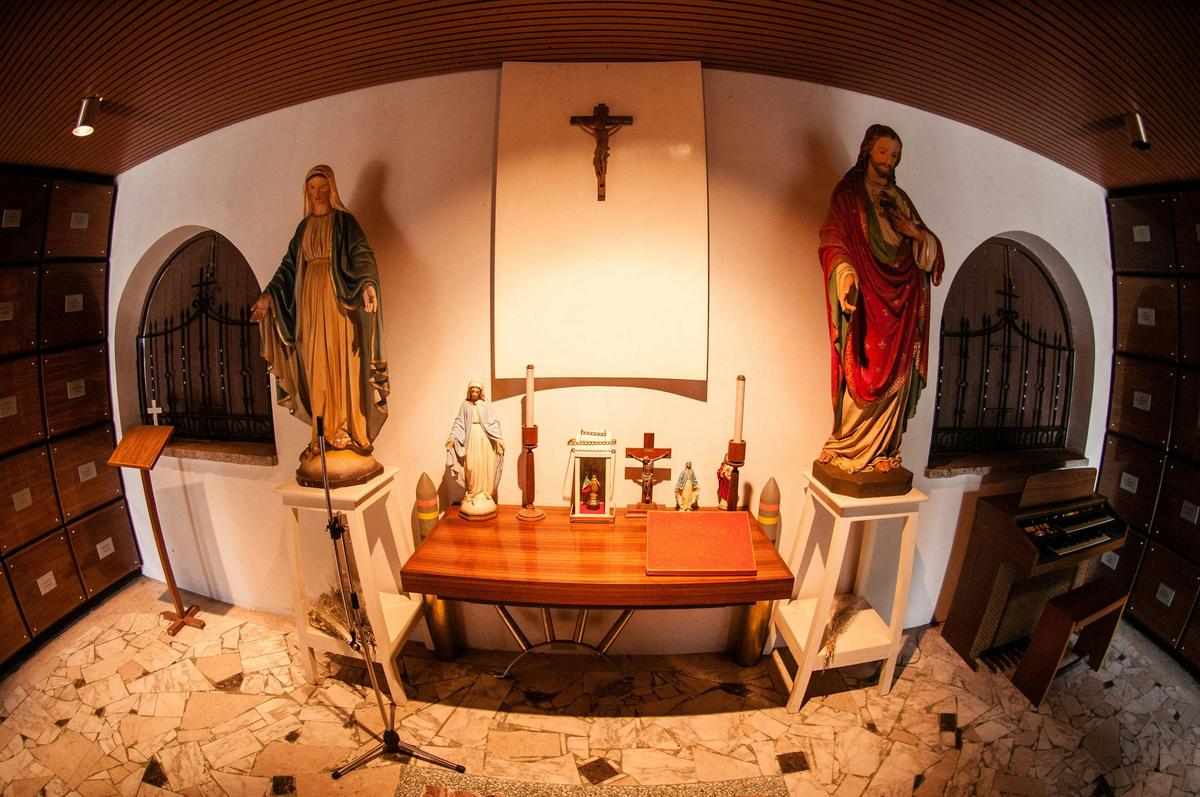
The mausoleum, completed in 1961, is in Italian style. It is built of Castlemaine stone with Roman roof tiles, a campanile and an altar of Italian marble. Each year, on Remembrance Day, mass is celebrated before a large gathering. There is also an Italian war memorial and chapel.
Elsewhere in the cemetery is the grave of King Charles Tattambo, the leader of the Goulburn tribe at the time of white arrival. He died in 1866. His son (the next leader) and widow were buried adjacent in 1874.
Murchison is on the land of Yorta Yorta traditional owners.
The Italian Ossario was opened in 1961. It is a memorial for Italian prisoners of war who died during the second world war in camps all over Australia. Prisoners of war were held near Murchison in 'Camp 13' and those who died had graves in the Murchison Cemetery. The Goulburn Italian Community rased funds in the 1950s to build the Ossario, and got permission for the remains of Italian prisoners of war from all states in Australia to be interred there. 130 POWs are buried in the shrine. The grounds, garden and shrine itself are beautifully kept and the Ossario is a classic Italian design.
Parking is available on the road out the front of the Murchison cemetery, a short walk leads to the Ossario gates. There is shade, seating, toilet facilities and water. The paths are flat and well kept so it will be no challenge for people with limited mobility.
C S
Google review
A beautiful memorial to commemorate the Italian prisoners of war of WW II who lost their life in Australia. It is the only Italian one in all Australia. You should also take the opportunity to visit the Murchison Historical Society on Stevenson Street and learn more about the Ossario and the Camps that were existing in the Murchison area. It is located at the rear of the Murchison Cemetery, the access is via the cemetery.
Trish Parsons
Google review
Attended Remembrance Sunday at Murchison cemetery.